Sir Donald Runnicles on Mahler and the Grand Teton Music Festival Orchestra – Presto Music
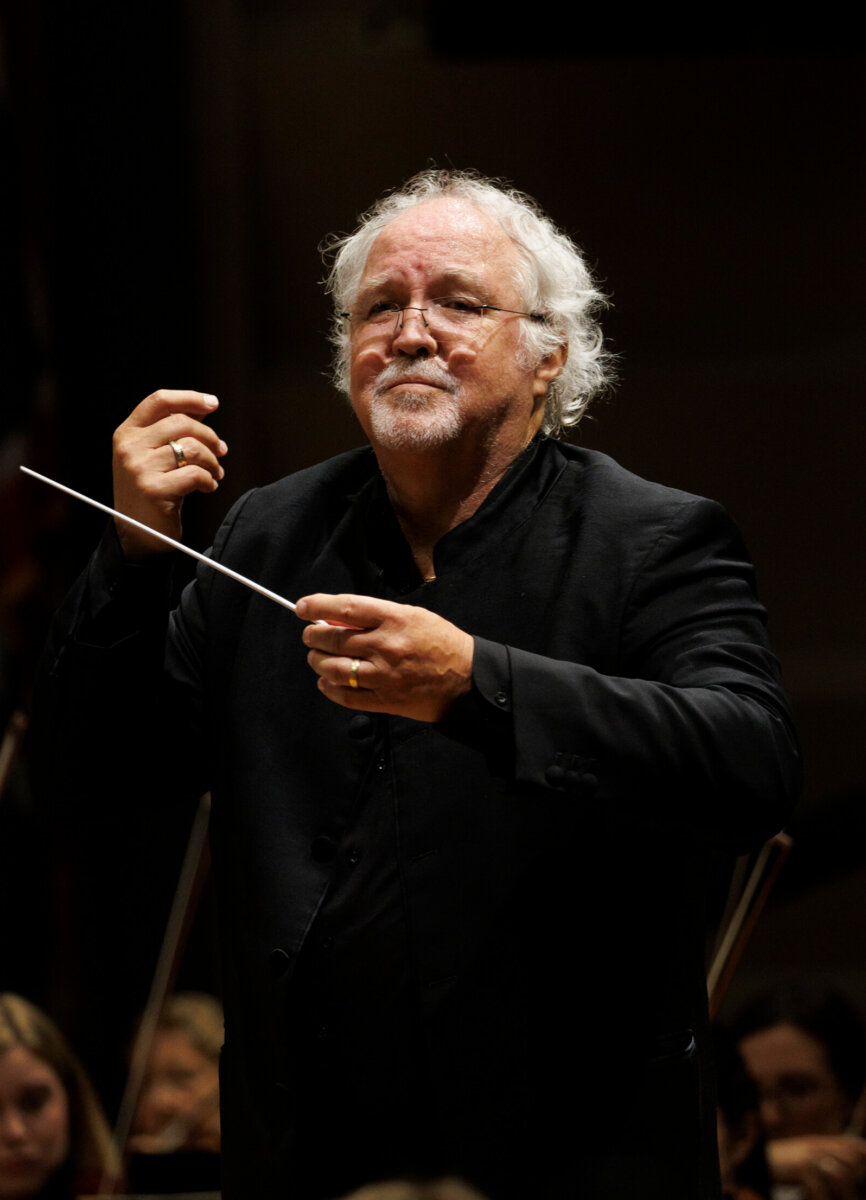
Sir Donald Runnicles and the Grand Teton Music Festival were featured on Presto Music on a recent album collaboration with Reference Recordings and an interview for the performance of Mahler’s Symphony No. 5.
Set against the majestic backdrop of the Teton mountain range and based in Jackson Hole, Wyoming, the Grand Teton Music Festival was founded in 1962 and has become one of the most important summer music festivals, attracting players from many of America’s leading orchestras.
Since 2005, their music director has been Sir Donald Runnicles and in 2023 they released their first album on Reference Recordings with live performances of all five of Beethoven’s piano concertos, featuring Garrick Ohlsson as soloist. Runnicles and the orchestra have now followed this up with their second album on the label, a performance of Mahler’s Symphony No. 5. I spoke to Sir Donald about his relationship with Mahler’s music, his thoughts on the Fifth Symphony in particular and how his association with the festival came about.
Presto Music: Could you tell me about your early experiences with Mahler? Are there any particular conductors or performances that stood out for you when you were getting to know his music?
Sir Donald Runnicles: Very much so: it was a performance of the Second Symphony with Leonard Bernstein and the London Symphony Orchestra at the 1973 Edinburgh Festival. I was a student, selling programmes at the Usher Hall and I would say that is where lightning struck: from that moment on I was an obsessive and it certainly set me on a trajectory. I was already dabbling in conducting, and for my honours degree in Edinburgh I wrote a thesis about Gustav Mahler: the connection between Mahler the composer and Mahler the conductor, and the extent to which so many of his revisions were due to his career as a conductor and being an obsessive re-orchestrator. So that’s where my love affair with Mahler began. After Edinburgh they went down to Ely Cathedral and I remember avidly awaiting the CBS recording.
Presto Music: You’ve mentioned Mahler being a highly accomplished conductor, constantly revising his scores and providing so many detailed markings. Is that helpful to you when you’re trying to shape your own interpretation, or is there a danger of trying to stick too rigidly to what he has put in the score?
Sir Donald Runnicles: I don’t think it’s a hindrance; it’s very indicative of a composer who was almost paranoid about his music in other conductors’ hands that they wouldn’t stick to what he’d written. With a lot of the things he writes, nicht schleppen, don’t drag, don’t rush, no ritardando, and so on, it was this feeling that there would be somebody out there who would want to make too big an issue of a transition. I think they’re helpful to see his concern as a conductor and what was really important to him.
On the other hand, I think you can be too rigid: sometimes you can adhere too much to the letter of the law and therefore you almost drag because it tells you not to rush. But I feel that they’re very important indications to what is important to Mahler. And my goodness, if I can just bring to life everything he’s written in that score, then I’m a happy man!
Presto Music: Along with No. 1, Symphony No. 5 is one of Mahler’s most frequently-performed symphonies. Why do you think that is?
Sir Donald Runnicles: It’s an incredibly well-crafted, brilliantly conceived symphony. We know Gustav Mahler in more sprawling environments, very long symphonies, no less wonderful. But in the Fifth there’s something a little more concise, more classical in its dimensions, except for, of course, the Adagietto. Mahler’s music can so often sound psychologically modern, with the sudden mood swings, the irony, anxiety, ecstasy, and vulnerability. The Fifth Symphony is an emotional rollercoaster, but there is also something in stark opposition to his other works: it’s such a life-affirming experience. Those last three movements particularly are some of the most wonderful, brilliant and positive music he ever wrote.
Listen to Mahler: Symphony No. 5.
Thank you Presto Music for this feature. Read more at the link below.
read the full story